Trauma, numbness, and survivor guilt
Luckiest Girl AliveTrauma, numbness, and survivor guilt are intertwined in TifAni FaNelli’s life after the attack at the Bradley School. The book presents trauma not as a single aftermath but as a recurring condition: ordinary sounds can provoke alarm, the body can react before understanding catches up, and survival does not guarantee either grief or relief. TifAni’s shifting responses—from emotional blankness to fear, isolation, and remorse—also expose how the community’s competing accounts of the attack make recovery harder.
Recurrence and the Body
Years after the shooting, a sudden crack from construction work makes TifAni swerve her car and check herself for injury. The sound has not come from a new attack, but her response belongs to the old one. Similar phantom pains sometimes appear while she waits for the subway or crosses a street, prompting her to touch the affected area. These episodes show trauma returning through present-day situations rather than staying safely in the past.
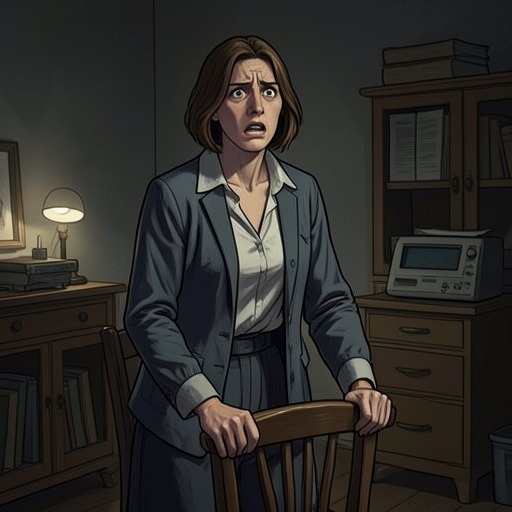
At the Bradley School, that readiness for danger becomes acute when TifAni and Andrew Larson see a car marked as security arrive outside. Having spent the day anticipating that something bad would happen, she immediately fears that the person has come for them. When a light moves through the room and someone calls out, she and Andrew hide beneath a desk. TifAni’s fear is fed not only by the immediate uncertainty but by years of warnings about predators posing as officials or workers. The scene makes the gap between actual danger and experienced danger consequential: even after the visitor leaves, she remains unable to move without help.
Andrew’s response shifts the scene from alarm to a moment of unguarded dependence. He crawls out first, then returns to reassure her and helps her stand. TifAni recognizes that she has been performing a victim’s mask, as though that were what Andrew expected, but her shaking body is not a performance. Their prolonged embrace and kiss follow the terror, not a deliberate decision to turn the encounter into romance. The episode reveals how safety can arrive through another person’s care while also leaving intimacy entangled with the fear that preceded it.
Numbness and Delayed Feeling
After the attack, Anita Perkins tells TifAni that Ben Hunter killed himself and that the plan had been for both shooters to die. Anita urges her not to feel responsible for what she has done. TifAni’s private response is more unsettling than an immediate display of grief: she does not feel bad, or feel anything. The absence of emotion does not settle what the event means to her; it marks a distance between what has happened and what she can yet experience.
The public first encounters the attack through news coverage. In a broadcast from the school, Matt Lauer reports that seven people died, including the two shooters, and that nine students are hospitalized with serious injuries. The report also describes the cafeteria fire and the unexploded bombs. Such information makes the scale of the event legible, but it cannot account for TifAni’s personal response. The contrast between the broadcast’s fixed figures and her numbness shows how public knowledge and private feeling proceed on different timelines.
Her later connection to Liam Ross further complicates any simple division between victim and perpetrator, or between grief and forgiveness. At his funeral, the meetinghouse fills until attendees have to gather outside to hear the service. TifAni observes that many students present had barely spoken to Liam. She nevertheless feels a special bond with him, recognizes that what he did was wrong, and recalls finding a form of forgiveness during a required sexual-assault seminar in her first year of college. That account does not erase wrongdoing; it shows that her understanding develops over time and through reflection.
Guilt, Suspicion, and Public Memory
TifAni’s strongest stated guilt concerns Peyton Powell. She learns that the cafeteria sprinklers had not worked and that Peyton died from smoke inhalation. She also learns that timely medical care could have changed his outcome. TifAni’s lasting self-reproach is that she left him behind. The knowledge gives her guilt a concrete focus, but it does not make her the cause of the institutional failure or the attack. Her account holds those realities beside the feeling that she cannot stop blaming herself.
Survival also brings public suspicion. Although there is not enough evidence to charge TifAni with a crime, the court of public opinion treats her as culpable. People point to her notes, writing in a yearbook, and fingerprints on a gun; Anita’s assessment that she showed little emotion and seemed eager to return to school also becomes part of the suspicion surrounding her. Dean Barton claims that Arthur Finnerman gave TifAni the gun and told her to kill him as planned. TifAni says Arthur never said this, but Dean’s popularity and paralysis lend his accusation credibility with an audience already looking for someone to blame. The distinction between legal responsibility and public judgment offers no protection from the latter.
The school’s response adds another layer of exclusion. Headmaster Mah questions whether TifAni should return, and even whether her return is right for the institution. Dan Rosenberg argues that the school faces a greater lawsuit if it refuses to let her back. TifAni chooses to return partly because she knows where she stands at the Bradley School and does not want to begin again in a new social hierarchy. Her decision is pragmatic rather than triumphant: familiarity offers a route through school, not a cure for what has happened.
Isolation and Retrospective Understanding
When school resumes, TifAni dry-heaves each morning before leaving home. She treats growing accustomed to loneliness as a task and comes to rely on it as a constant. The cafeteria will not be rebuilt for another year, so students eat at their desks and pizza is delivered. These ordinary arrangements register the disruption in daily life without suggesting that the community has returned to normal. Her continued schooling and work are forms of persistence, but they coexist with physical distress and withdrawal.
Later, the investigation into Arthur and Ben challenges the simplified public narrative that the attack was explained by bullying. Psychologists reviewing the evidence conclude that Arthur initiated the plan. The diaries and other records reveal motives and a partnership more complicated than the version circulating in the media. The investigation also establishes that a rumor Olivia Kaplan spread about Arthur and Ben was false. For TifAni, this revised account does not resolve every uncertainty. She wonders whether, during her last encounter with Arthur, she set him off when he might otherwise have told her about his plan or asked her to join it. The question remains conjectural, but its return shows how knowledge can reopen responsibility rather than close it.
During the later documentary filming, Dean acknowledges that he hit TifAni and says there was no excuse for it. His explanation does not erase what he did. TifAni considers whether the filming means she has sold out, then distinguishes that concern from a private reason she has kept for years that makes her give Dean some slack. She also admits that she has wondered what would have happened had Arthur actually placed the gun in her hands, and believes she might have used it against Dean. The admission brings anger into a story often organized around her silence, fear, or alleged lack of feeling. It does not transform her into a shooter; it reveals how harm, rage, and survival can occupy the same memory.
Meaning of Survival
The book resists treating survival as an uncomplicated identity. TifAni can feel nothing when told of Ben’s death, grieve a connection to Liam, blame herself for leaving Peyton, fear danger in a later room, and continue to be judged by outsiders—all without those responses cancelling one another. Trauma recurs through sound and bodily alarm; guilt attaches to particular losses; and public narratives press survivors into roles that may not fit their experience. The distinction between being alive and feeling recovered remains central to her story.